Growing Kalanchoe Daigremontiana From Plantlets
By David
Last year I was visiting a Christmas fair when I spotted a table of highly strange looking plants, they reminded me of either a crocodile or some sort of succulent stinging nettle. My interest was piqued and I was keen to discover what these plants might be. Looking at the label I saw that they were called Kalanchoe daigremontiana. Never having heard of this I did a quick Google to check what growing conditions it required and whether I’d be likely to be able to provide them in my home.
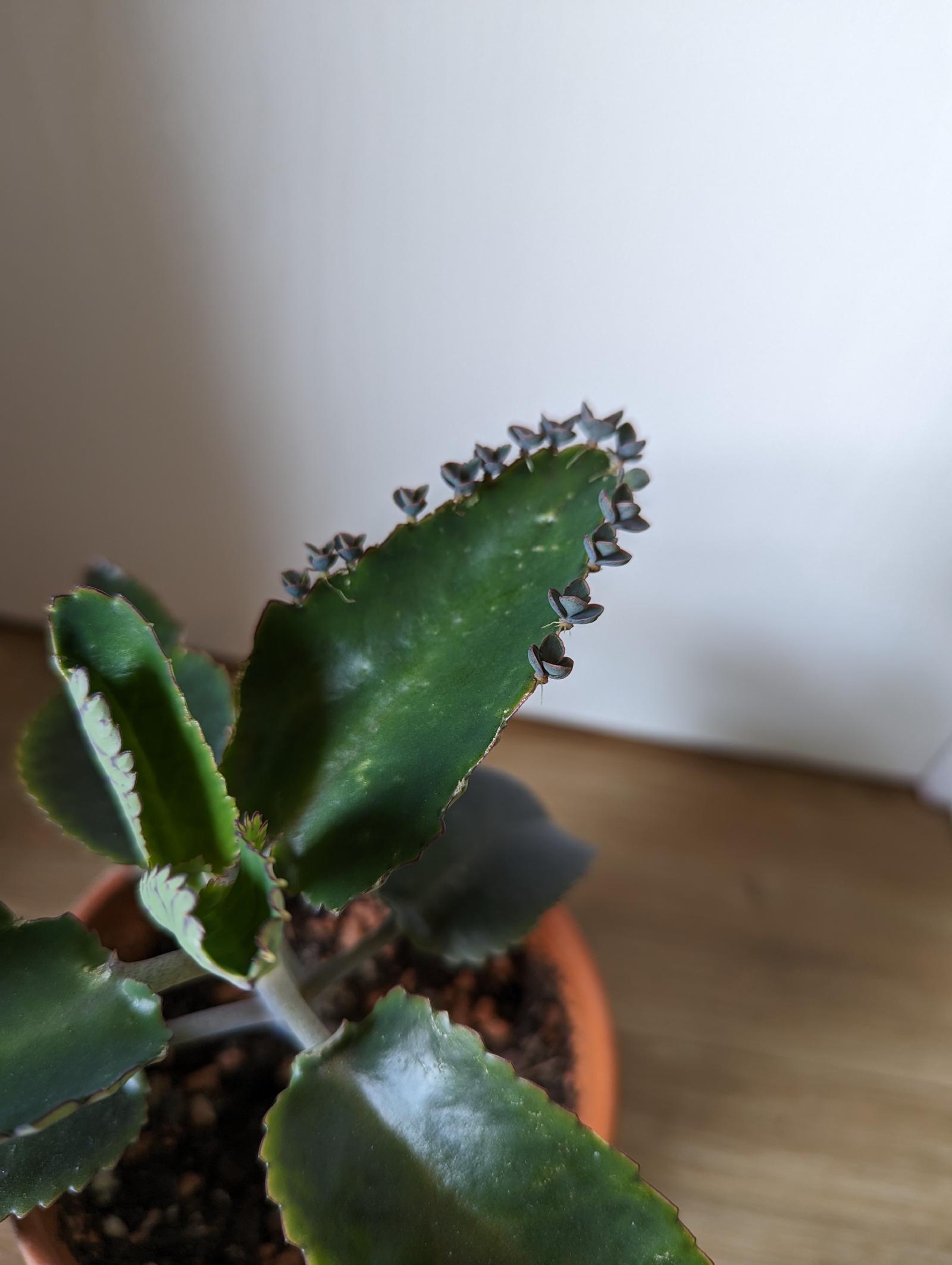
The mother of thousands grows tiny plantlets along the edge of its leaves. When these fall onto soil, they grow into a new plant.
Upon researching, my interest was increased upon discovering that the plant propagates by producing tiny plantlets along the edges of its leaves, giving it the common name “mother of thousands”. Naturally, upon realising that I should probably be able to grow it at home, I had to have one.
My experience so far has been that this is a fairly easy plant to grow, it needs direct light so is perfect for a south facing windowsill. I’ve found it seems happiest to be watered thoroughly when the lowest leaves start to soften. While I grow it indoors it can be grown outdoors in warm climates but as it can spread easily, it is commonly grown in pots. Take particular care if growing it outdoors in an area which doesn’t receive winter frosts as it can become invasive. If your area does get frosts, this will kill any outdoor plants so they won’t continue to spread. You should therefore ensure that any plants you do wish to keep are taken in over the winter. Mother of thousands is toxic so don’t eat any part of the plant and take particular care if growing it around children or animals.
During the winter months, growth was very slow and while I was excited to see a new pair of leaves forming, for each new pair that grew, the oldest pair would die off, causing the plant to get slightly leggy. I was therefore very excited upon returning from a short trip, to find that the few days of warmth we’d had while I was away had caused the leaves to grow significantly broader and, more excitingly, the first set of plantlets to start forming.
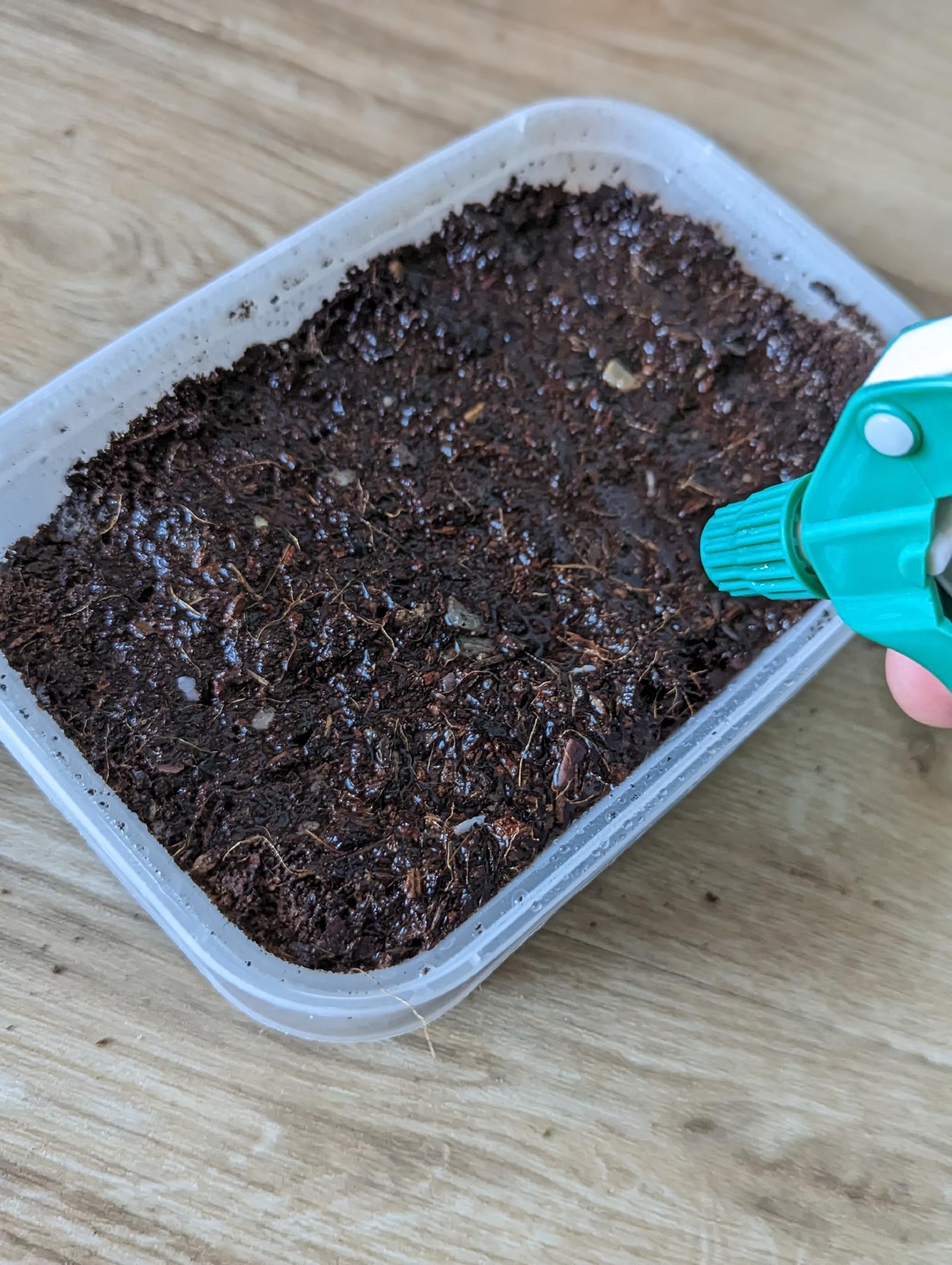
As I don’t want to water too much before the plantlets are rooted, I made sure the soil was good and moist before starting.
I left the plantlets to develop for a few days until I noticed some start to fall off by themselves so I realised this was probably the time to plant them up by by themselves. As they are all so tiny and I don’t have enough pots for one each, I planted them all in a takeaway container with some holes drilled in the bottom for drainage. I filled the tray with some succulent potting mix and gave it a good spray with water as I didn’t want to water later and disturb the plantlets. As they are so small and have very little space to store water I expect they’ll want to be kept a little more moist until they are more developed.
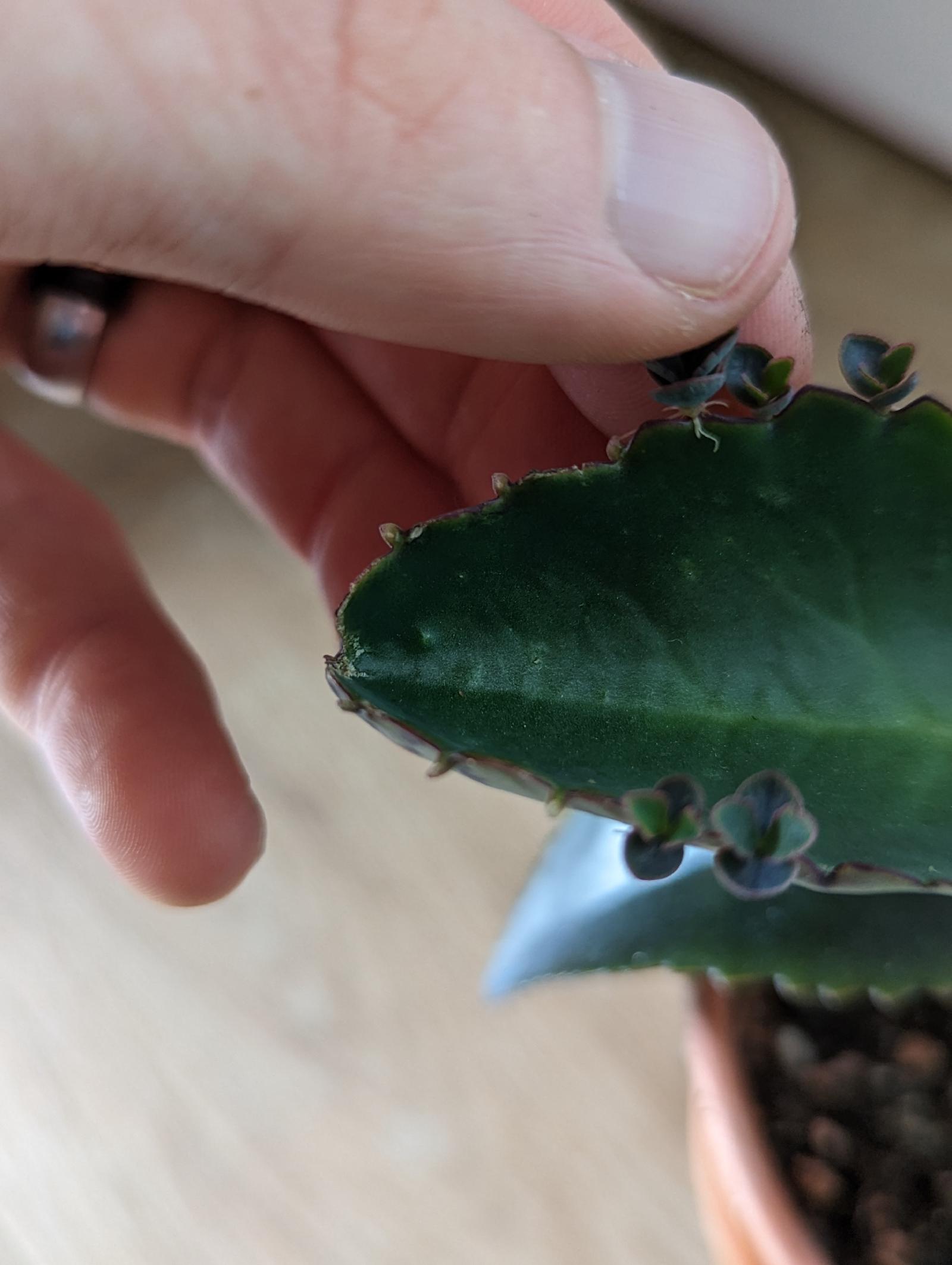
The plantlets turned out to be very easy to remove, most came away with just a light touch but some needed a gentle twist.
It was now time to remove the plantlets from the mother plant. Initially I was a bit unsure about how to do this without damaging them but I found that most of them came off just by brushing against them and the few that were a bit more attached just needed a gentle twist to come off. This is unsurprising given that in nature they’re brushed off by animals and the wind, allowing the plant to propagate.
I planted most of them by simply placing them on top of the soil with a roughly 1cm gap between them. For the ones that had a more developed root system I sprinkled a few crumbs of potting mix over the roots to help them bed in although I’m not sure if this was necessary. Finally, I placed them on a sunny windowsill and will try to keep the top layer of soil slightly moist until the plants are well rooted and showing signs of growth.
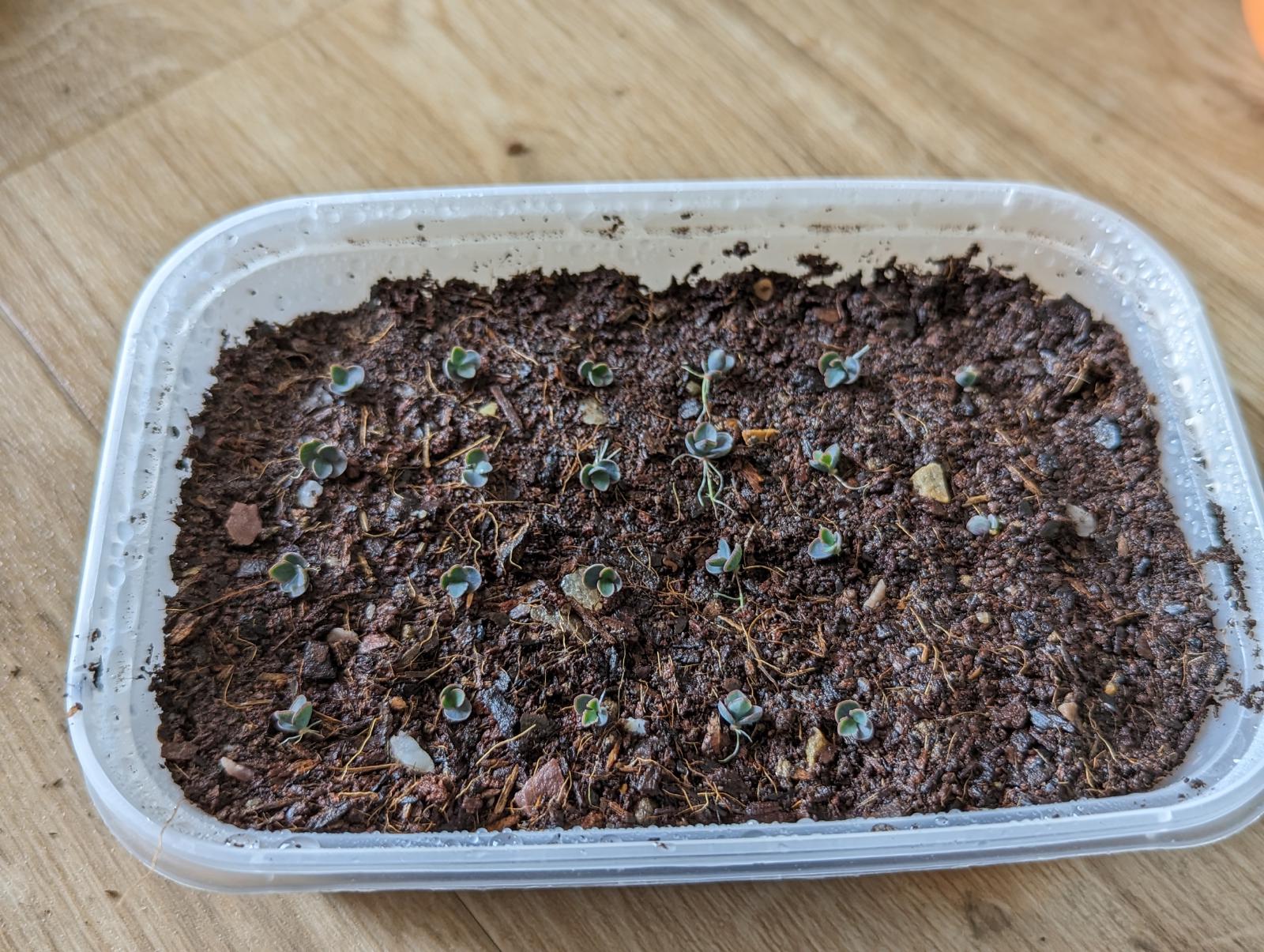
The plantlets are placed with roughly 1 cm of space around them. I’ve found from the parent plant that the root system isn’t all that extensive so that should be plenty for now.